The Relationship Between Resilience and Electrification
How fire-safe building and home electrification work together to create safer, more efficient homes for the future.
Key Takeaways
Building to resilient standards and electrifying your home are complementary goals that can be achieved together during rebuilding
Electrification can reduce ongoing wildfire risk while also lowering long-term energy costs
Financial incentives exist for both resilient building and electrification, making now the best time to pursue both
In the months after the Eaton and Palisades fires, rebuilding has become a triage exercise as homeowners navigate insurance payouts, gap financing, and construction decisions—balancing what they can afford, what will remain insurable, and how to build it.
With budgets stretched and hard decisions accumulating, many families face a choice: Should I electrify my home or harden it against a future fire? This is a false choice, especially given the unique conditions in California: a robust ecosystem of regulations and incentives for electrification that was already in place before the fires. And crucially, pursuing both goals now during the rebuild process is the most cost-effective moment to do so.
Resilient rebuilding and electrification reinforce each other, and funding through rebates and incentives exists to help families build homes that are both safer and more energy efficient. Fire resilience and electrification are two sides of the same coin, making a home more likely to withstand disaster, more affordable to operate, and better positioned for California's changing climate landscape.
What Does Electrification Look Like?
“Electrification” simply means replacing gas-powered appliances with high-efficiency electric alternatives: heat pumps instead of gas furnaces, induction cooktops instead of gas ranges, heat-pump water heaters instead of conventional tank models. Many homeowners also add electric vehicle chargers or backup battery storage.
Electric appliances eliminate indoor air pollution from gas combustion, which studies have linked to respiratory problems. Modern electric systems also accomplish more with less energy, doing the same job as gas equivalents but at a fraction of the energy demand. When paired with solar panels and battery storage, an all-electric home can generate and store its own power, providing genuine energy independence and often reducing utility bills. And because electric systems produce no on-site emissions, they dramatically reduce a household's carbon footprint.
Electrification and Fire-Resilience Work Together
Approaching fire resilience and electrification together can create a home that’s more secure, affordable, and sustainable in the long run. Both help prepare the homeowner for tomorrow's conditions—investments in long-term affordability and safety, for individual households and for entire communities.
Here are the benefits of pursuing resilience and electrification at the same time:
Electrification means lower fire risk. Gas lines pose a dual threat in wildfire country: They can become ignition sources during seismic events or when infrastructure is damaged, and as was the case during the Eaton blaze, they can literally add fuel to a fire.
All-electric homes mitigate that risk by eliminating gas lines in your home. Coupling electrification with wildfire-resistant building measures, like using non-combustible materials, significantly reduces the likelihood of a home (and the neighborhood it belongs to) igniting in the first place.
Resilience and electrification save money on multiple fronts. Long-term housing costs include both insurance premiums and monthly utility bills. Going electric helps protect against rising energy costs by dramatically improving efficiency and power independence, as noted above. On top of which, some insurers are beginning to view all-electric homes more favorably. Growing momentum to integrate energy efficiency into home appraisals also means electrification investments could raise a home's value over time.
Meanwhile, rebuilding with wildfire resilience already improves insurability. Homes built to strict fire-safety standards, like the IBHS Wildfire Prepared Home Plus Standard, qualify for insurance discounts and make coverage easier to secure, a critical consideration in California's evolving insurance landscape.
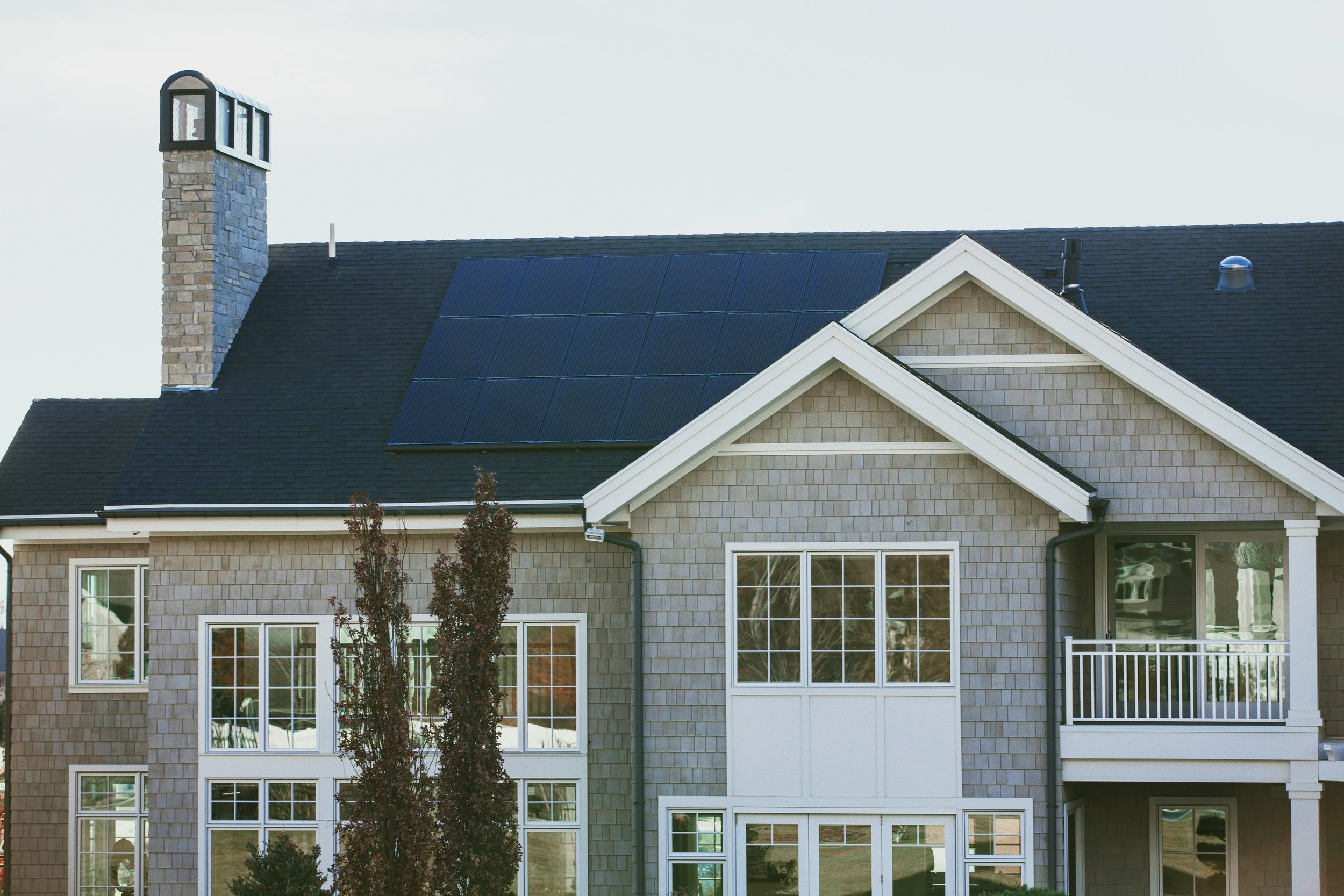
Community benefits multiply when more homes electrify. Energy-efficient, all-electric homes reduce overall electricity demand, especially during peak hours when the grid is most stressed. This can create savings that can be passed to all customers as power companies need to build fewer new plants or transmission lines. When combined with distributed energy resources like heat pumps, rooftop solar, battery storage, and bidirectional EV charging, electrified homes can strengthen grid resilience. They can generate, store, or consume energy in a way that helps balance the grid, making individual homes contributors to a more reliable energy system. Solar and battery systems also provide backup power during the outages that can follow natural disasters.
How to Make Electrification Part of Your Rebuild
Installing electric infrastructure in new construction costs significantly less than retrofitting later, in the same way that making your home fire resilient now is more cost effective than implementing the same upgrades down the road. The homeowner is already redoing electrical panels, running new wiring, and installing appliances; making those systems all-electric from the start avoids expensive conversions down the road. It can also appeal to future buyers.
Those who aren’t ready to commit entirely might consider rebuilding "electrification-ready," adding 240V outlets behind each gas appliance. That way, when the homeowner is ready to switch their gas range for an induction cooktop or upgrade their water heater, the infrastructure is already there. It's a low-cost insurance policy for future flexibility.
Resources to Help You Get Started
California offers robust incentives to make electrification more accessible. Here’s where to start:
CA Energy-Smart Homes provides comprehensive rebates for all-electric construction and electrification alterations.
HEEHRA Rebates offers rebates for retrofits (single-family home rebates are currently fully reserved, but multi-family funding remains available).
HOME LA offers electrification incentives specifically to LA fire survivors.
GO ZERO provides incentives for zero-emission space and water heating appliances.
GoGreen Financing offers affordable financing for energy-efficiency and electrification upgrades.
You can explore more electrification incentives by zip code here.
Rebuilding after loss is never easy, but it offers a chance to build smarter, stronger, and cleaner. A home that pairs resilience with electrification stands firm against climate risk, weathers rising energy costs, and holds its value in ways that far outlast the price of construction.