How Three Climate-Vulnerable Areas Rebuilt with Resilience, Kept Insurance, and Increased Home Values
When communities rebuild to climate-resilient standards, insurance companies take notice, and home values increase.
Key Takeaways
Rebuilding to resilient standards can increase the likelihood of a home withstanding the next disaster, remaining insurable, and preserving its value.
In Florida, homes built to FORTIFIED standards have reduced homeowners' insurance premiums by up to 60%.
In Alabama, homes built with storm-resilient roofs have a 6.8% increased home appraised value than those without.
In California, homes built to the highest wildfire safety standard can save up to 21% on home insurance premiums.
Homeowners rebuilding after the Eaton and Palisades fires are asking a critical two-part question: How can I build a safer home, and how can I be sure that home is insurable over the long run?
With increasing once-in-a-lifetime weather events, it’s impossible to guarantee total protection from a natural disaster. And insurability is a complex, multi-layered topic.
However, case studies and examples from across the country show that homeowners who rebuild to climate-resilient standards can increase the likelihood that their homes will withstand the next disaster, remain insurable, and preserve their value.
Three case studies highlighted below show how communities have rebuilt to heightened, resilient standards—the same standards that are verified by the Insurance Institute for Business and Home Safety (IBHS), an independent non-profit scientific research and communications organization supported by insurers and reinsurers whose building safety research strengthens the nation’s resilience against the growing threat of severe weather and wildfire.
IBHS runs a large-scale testing facility in South Carolina where researchers recreate everything from wildfire conditions to flooding and wind conditions to test how different home components perform. They also certify building components and buildings and issue ratings for resistance to climate disasters, nationwide.
Together, the following three case studies demonstrate to all of us, but especially homeowners, that rebuilding with resilience pays off. After all, every $1 spent rebuilding with resilience has the potential to save $210 in avoided future losses. It’s an upfront, critical investment to maximize the chances that homes stay safe, insurable, and enduring investments for years to come.
Example #1: Florida’s FORTIFIED Standard
How Florida’s FORTIFIED Standard Creates a Stable Insurance Market and Protects Against Powerful Hurricanes
For more than a decade in Florida, insurers have rewarded homes built to stronger hurricane and flood standards with reduced premiums, creating a clear financial incentive for resilient construction.
For more than a decade in Florida, insurers have rewarded homes built to stronger hurricane and flood standards with reduced premiums, creating a clear financial incentive for resilient construction.
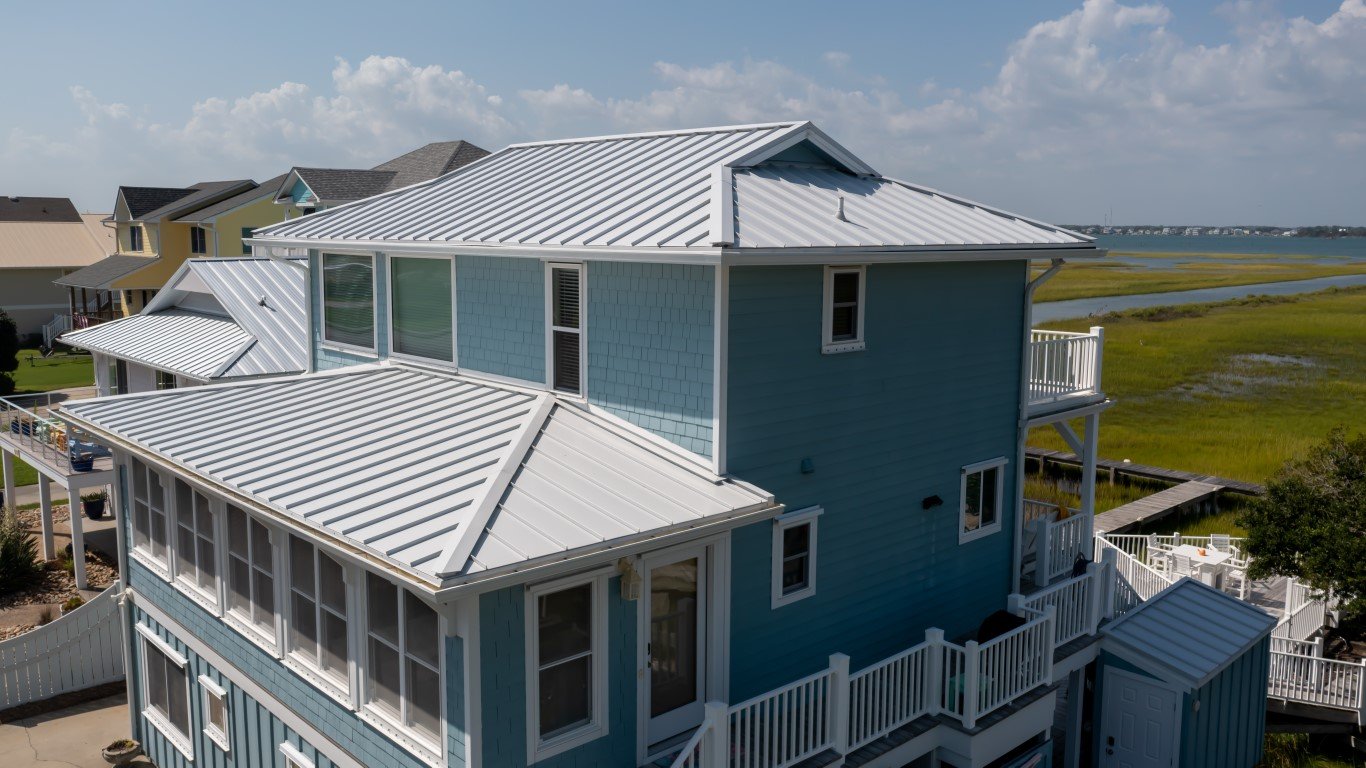
FORTIFIED is a voluntary construction and re-roofing standard also created by the IBHS that helps strengthen homes against the most common causes of storm damage—including wind, water intrusion, and roof failure.
A FORTIFIED home uses special materials, such as stronger nails, improved roof-to-wall connections, and better roof gable bracing, along with other measures to harden building exteriors. The program also provides guidance to builders on installing openings, vents, and exterior materials that resist wind pressure and blown debris.
The FORTIFIED program has been in place since the early 2010s and has reduced homeowners' insurance premiums in Florida by up to 60%, according to Sage Sure, an insurer that covers properties in climate-vulnerable areas.
Insurers offer discounts of 20% to 60% for homeowners who build to FORTIFIED standards, and claims have decreased significantly since the program was implemented, making the insurance industry in Florida more stable.
The success and cost savings for homeowners in Florida demonstrate that insurers will reward clear, science-based construction standards when they’re adopted at a large scale.
Lower losses following a storm create more predictable risk for insurers, making it easier for companies to stay in the market, which stabilizes long-term home values. It's a model California can learn from, especially as insurers pull out of the market following the wildfires in January.
Example #2: Strengthen Alabama Homes Program
How Alabama’s Home Strengthening Grants Fortify Against Wind Damage and Increase Home Value by 6.8%
In Alabama, the Strengthen Alabama Homes program has also become a proof point of how climate-resilient building can help stabilize the insurance market and protect home values.
The program offers grants of up to $10,000 for homeowners to retrofit roofs and other building elements to the IBHS FORTIFIED standard. There is no income limit, which means that the program is available to everyone, and once a roof is rebuilt to the standards, homeowners can save as much as 55% on insurance premiums, particularly on wind coverage.
The program has allowed homeowners to fortify more than 50,000 roofs in the state. When Hurricane Sally hit in 2020, FORTIFIED-designated construction performed better than conventional construction, resulting in 55% to 74% fewer overall losses.
In addition to making homes more resistant to hurricane winds, homeowners reaped benefits. According to another study by the University of Alabama, the price of homes that earned the FORTIFIED designation increased by 6.8% compared to homes built only to conventional construction standards.
The return on investment for rebuilding to these standards has been significant as well. According to IBHS, a 2022 study by the University of Alabama found that the return on investment for homeowners who build to the FORTIFIED roofing standard ranged from 8.1% (in inland areas) to 72% (in coastal areas, when the most robust FORTIFIED designation, the Gold designation, was installed).
Example #3: The Nation’s First Fire-Resilient Community
How One Neighborhood Reduced Community Risk by Building to Higher Standards
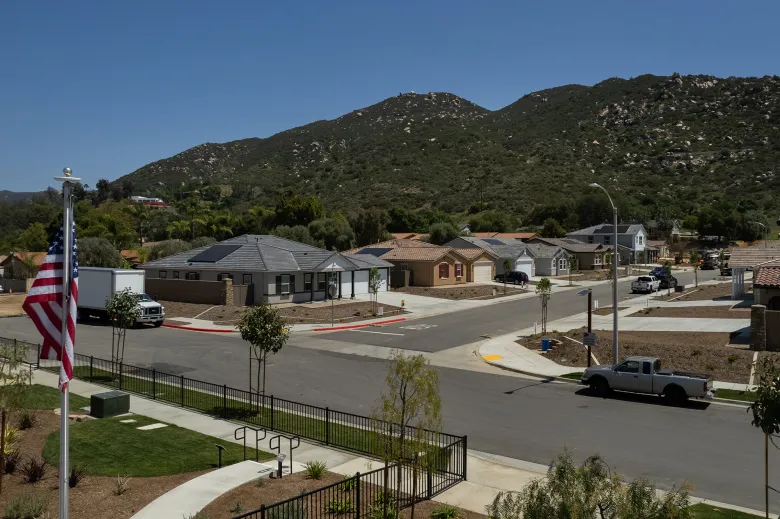
Dixon Trail, a residential community developed by KB Home in Escondido, California, is the first purpose-built wildfire-resilient neighborhood in the U.S.
All homes are built to the IBHS Wildfire Prepared Home Plus Standard. They have features like Class-A fire-rated roofs that resist blown-ember ignition, vents and attic openings that are ember- and flame-resistant, noncombustible gutters, double-pane tempered glass windows, fire-resistant stucco exteriors, and greater spacing between homes to reduce the risk of fire spreading quickly through the community. There’s also minimal flammable vegetation and landscaping around the houses to lower fire risk. While all of this sounds technical, in reality, they are simple material changes that go a long way towards protecting our homes.
Once complete, the neighborhood will receive the “Wildfire Prepared Neighborhood” certification, a designation that matters to both California homebuyers and insurers across the state.
For homebuyers, a home built to the IBHS’s Wildfire Prepared Home Plus Standard is appealing in a state with heightened wildfire risk. For every new homeowner in the Dixon Trail community, the pre-disaster mitigation work has already been done.
“Buyers want to feel safe in their homes and this is a really big plus for them,” said Steve Ruffner, the regional general manager for KB Home’s coastal division.
For insurers concerned about their heightened exposure to wildfires in California, homes in Dixon Trail present an opportunity to issue new policies (elsewhere in California, insurance companies are raising premiums, reducing coverage, electing not to renew policies, and even leaving the state of California altogether, forcing more residents into the state’s market of last resort.
“Homes that have been certified as a Wildfire Prepared Home or Wildfire Prepared Home Plus are excellent risks and it’s highly likely that Mercury would renew these customers. Other factors are also considered when offering renewals, but we believe homes that achieve these designations are significantly better wildfire risks and would therefore be much more likely to be renewed,” a Mercury Insurance executive told Forbes.
Mercury has indicated that it will continue to write new policies in California for homes and neighborhoods built to fire-resistant standards.
Homes built to the IBHS’s Wildfire Prepared Home Plus Standard can save up to 21% on home insurance premiums, according to the non-profit, Insurance for Good.
How to Start
If you’re in the throes of rebuilding and overwhelmed with choices, you don’t have to navigate this alone.
We’ve created the Platform for Long-Lasting Access and Readiness (PILLAR) program to help you navigate and understand your options for rebuilding your home with resilience. PILLAR is designed to make building to wildfire-resistant standards easier and more accessible to everyone.
The platform helps you navigate the rebuilding-with-resilience process by connecting you with qualified builders, insurers, and lenders.
PILLAR offers guidance, vetted plans, and confidence that financing and insurance will support your resilient reconstruction, and help you return to a safer, stronger, and more valuable home.
Step 1. Learn what makes your home insurable
Pillar will show you the building choices that protect your home and qualify you for lower insurance rates.
Step 2. Get a personalized estimate to rebuild with resilience.
We’ll calculate an estimate based on your specific needs.
Step 3. Connect to Funding
We’ll match you with grants and loans to finance your rebuild.