
Rebuilding with Resilience
A Practical Guide to Designing and Rebuilding Homes for Wildfire-Prone Environments
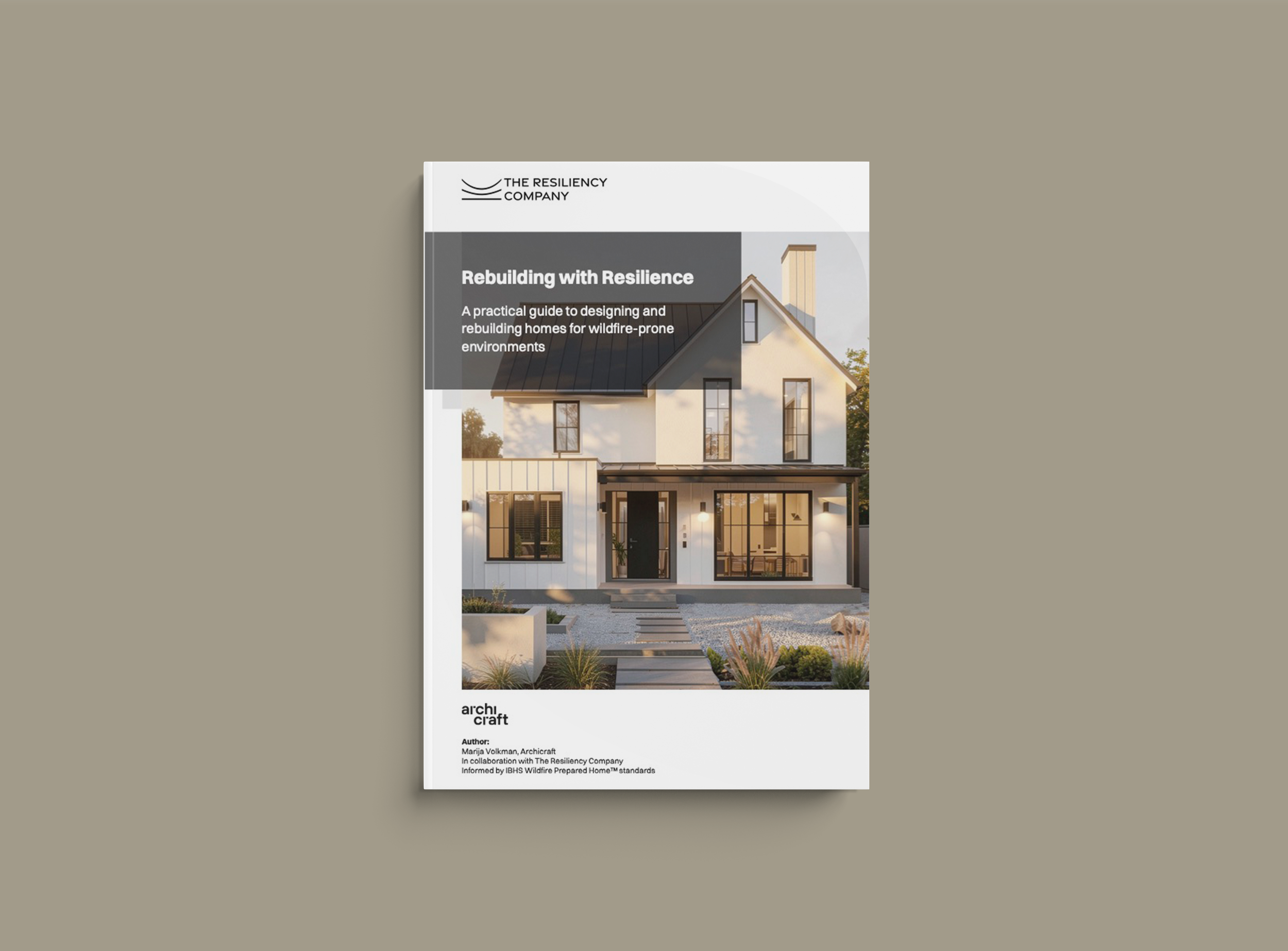
A few key takeaways across the 73-page manual are:
Most homes ignite because burning embers exploit small vulnerabilities like open vents, debris-filled gutters, or combustible fencing attached to the structure
Wildfire-resilient design is now a financial necessity, not just a safety upgrade. Insurers increasingly require documented mitigation beyond code compliance in exchange for coverage.
The best time to incorporate resilience is at the beginning of the design process, when you can create a coordinated, layered defense strategy.
We're pleased to share our new manual, Rebuilding with Resilience: A Practical Guide to Designing and Rebuilding Homes for Wildfire-Prone Environments.
Developed in partnership with Archicraft, an architectural design studio specializing in fire-safe construction, the manual translates the science of fire safety into concrete design decisions. The information is grounded in the Insurance Institute for Business & Home Safety’s (IBHS) Wildfire Prepared Home technical standards and validated by post-fire investigations.
This manual covers how wildfire mitigation is a coordinated system, from site planning and exterior assemblies to details that are often overlooked. It includes thorough guides to noncombustible building materials, overviews of different resilient standard requirements, and common mistakes. Its goal is to help those involved in the rebuild and homeowners understand why certain decisions matter, when they matter, and how they impact long-term risk, insurability, and building performance.
Over the next few weeks, we plan to highlight different parts of the manual here and our newsletter. It’s going to take all of us to achieve resilience so forward this newsletter to those who you think might be interested in learning more.
We're grateful to the team at Archicraft for lending their expertise to an essential resource for our community. Thank you also to the Foothill Catalog Foundation and Brookfield Residential for providing case studies, and thank you to the Altadena Collective for providing home renderings of what is possible. We recommend downloading the manual as a PDF for the best quality.
