What Does it Mean to Rebuild a Safer, More Wildfire-Resilient Home?
Understanding the benefits, costs, and roadmap to building a home that is better equipped for wildfires and more insurable over the long term.
Key Takeaways
Resilient rebuilding means designing for tomorrow's conditions, not yesterday's.
The upfront cost is modest, but the long-term benefits to the broader ecosystem are substantial.
New financing options and platforms exist to help guide homeowners through the rebuilding with resilience process.
No homeowner ever imagines they’ll lose their home to a wildfire, but when they do, they’re faced with hundreds of decisions about how to rebuild. It’s overwhelming, time-intensive, expensive, and stressful.
And this is on top of everything else: negotiating with insurance, navigating interim accommodations, figuring out how they’re going to pay for it all. The fear of going through this difficult experience again is what leads many homeowners to start asking questions about resilience.
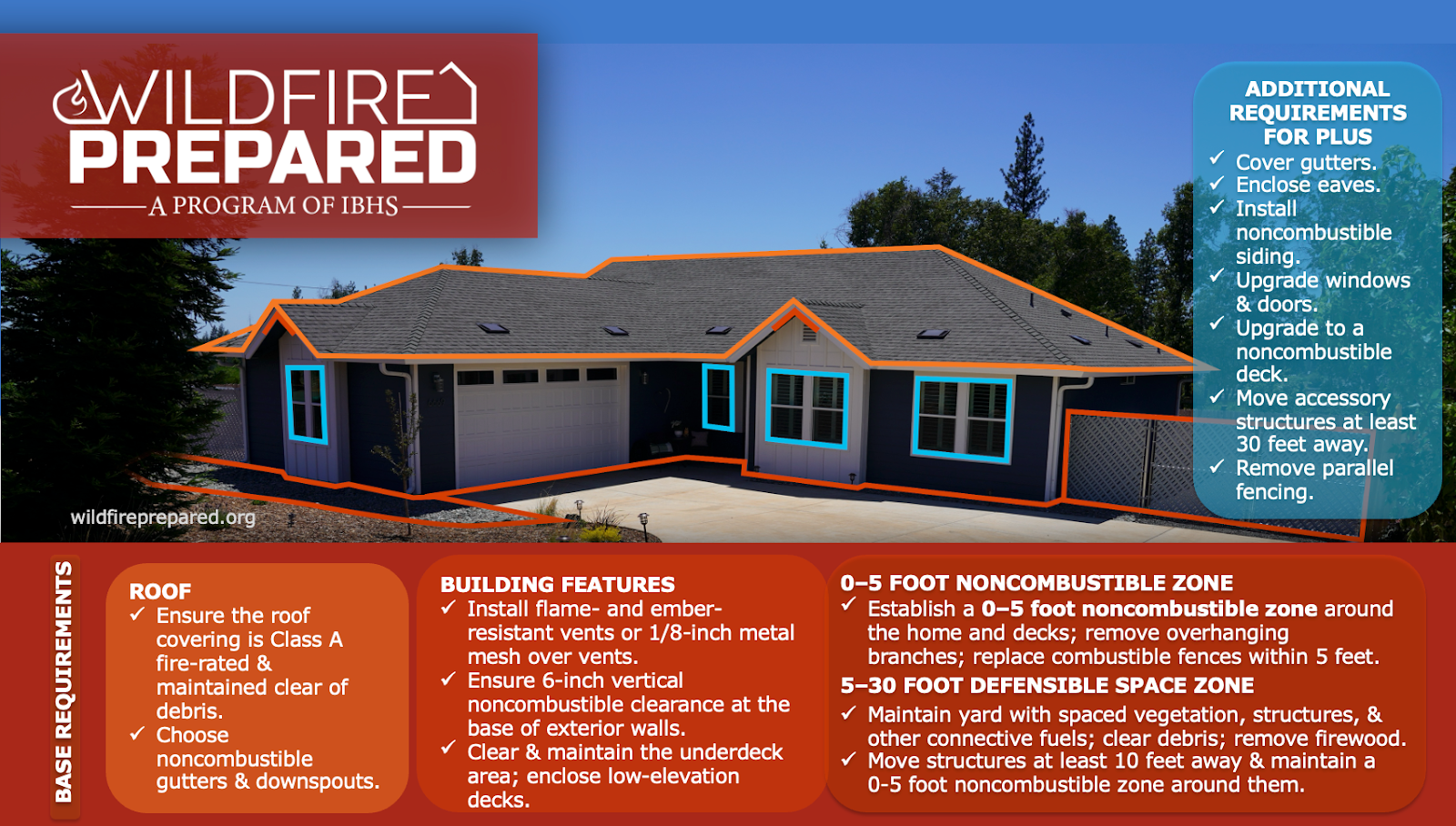
Exploring how to rebuild to an elevated resilient standard can feel like an added burden. Should you rebuild to the IBHS Wildfire Prepared Home Base standard? Or the Prepared Home Plus Standard? What is a Firewise Community?
And crucially, how much does it cost? Does rebuilding to a more resilient standard pay off in terms of a safer home, a greater likelihood of insurability, and preserved home value?
The questions keep coming, and the answers aren’t always straightforward.
In this article, we break it all down:
Definition: What is rebuilding to resilient standards?
Benefits: What are the benefits of rebuilding to resilient standards?
The resilient rebuild ROI: How much does it cost, and what is the return on investment?
The roadmap to resilient rebuilding: Where should homeowners start?
What is Rebuilding to Resilient Standards?
Resilient building means designing infrastructure—physical, economic, and social—so that it can withstand and recover from environmental hazards. And in a world with ever-increasing climate risk, how we rebuild and adapt our understanding of resilience matters more than ever.
At the individual home level, rebuilding with resilience means designing tomorrow’s home for tomorrow’s conditions—not yesterday’s.
This means incorporating different material choices, designing new site layouts, and selecting other architectural characteristics that help a home survive a disaster, like vents that keep out embers, noncombustible gutters that minimize fire risk, and ember-resistant landscaping around a home to reduce the spread of fire from home-to-home.
The Benefits of Rebuilding to Resilient Standards
Benefit #1: Your next home can be stronger and safer.
Relatively small material improvements can dramatically increase a home’s survival odds. Organizations like the Insurance Institute for Business & Home Safety (IBHS) have studied how houses ignite, as well as how specific materials, site plans, landscaping choices, and neighborhood layouts can prevent fires from sparking and spreading.
Proof Points:
In Orange County, the Orchard Hills community was designed to incorporate multiple layers of fire defense, from its vegetation to its external walls to the houses themselves. When the Silverado fire hit in 2020, the neighborhood escaped untouched.
After Hurricane Sally hit the state, IBHS FORTIFIED homes in Alabama suffered significantly less damage, with claim frequency reduced by 55%-74%.
Benefit #2: Rebuilding to resilient standards can increase a home’s future insurability and minimize rising insurance rates.
As insurance companies recalculate their risk exposure (and some elect to cancel policies or shutter operations in states like California), homes built to resilient standards are more likely to remain insured.
Proof points:
Dixon Trail in Escondido, California, is the first purpose-built wildfire-resilient neighborhood in the United States. Insurers like Mercury have indicated that they will continue to write new policies in California for homes and neighborhoods built to these fire-resistant standards.
In California, homes built to the Wildfire Prepared Home Plus standard can save up to 21% on home insurance premiums.
In Florida, homes built to FORTIFIED standards have reduced homeowners' insurance premiums by up to 60%.
Benefit #3: Rebuilding to resilient standards can preserve—and even increase—a home’s value.
Homes that are stronger, safer, and remain insurable are good investments—particularly in comparison to homes that are not built to resilient standards.
Proof points:
In California, homebuilders have seen strong demand from homebuyers for homes built to the IBHS Wildfire Prepared Home Plus standard, an indication of strong resale value.
In Alabama, the same FORTIFIED standards have been found to increase home values by 6.8% compared to homes built only to conventional construction standards.
The Resilient Rebuild ROI: How Much Does it Cost, and What is the Return on Investment?
A home built to resilient standards may cost more upfront than rebuilding a home to current building codes, which often represent yesterday’s climate conditions. The IBHS estimates rebuilding to wildfire-resilient standards can be 2-3% more than conventional construction, with the additional cost stemming from specific material and design choices that reduce the likelihood of the home catching fire in the next disaster. Enclosing eaves, implementing Zone Zero, installing noncombustible siding—these are examples of building features and characteristics that require additional investment but help harden the home significantly.
Homes that are better equipped to handle wildfires also often unlock premium discounts from insurers and help reduce the likelihood of rates increasing in the future. The more homeowners who choose to rebuild with resilience, the less likely insurers are to experience catastrophic loss. According to Headwater Economics, “every $1 spent on rebuilding wildfire-resistant communities could save $210 in avoided future losses.”
What’s more, rebuilding with resilience doesn’t just fortify an individual home; it decreases risk for the surrounding community. More wildfire-resilient homes mean fewer opportunities for fire to spread across streets and neighborhoods. When all stakeholders buy into wildfire preparedness, everyone benefits. Homes that are better equipped to handle wildfires also often unlock premium discounts from insurers and help reduce the likelihood of rates increasing in the future. The more homeowners who choose to rebuild with resilience, the less likely insurers are to experience catastrophic loss. According to Headwater Economics, “every $1 spent on rebuilding wildfire-resistant communities could save $210 in avoided future losses.”
What’s more, rebuilding with resilience doesn’t just fortify an individual home; it decreases risk for the surrounding community. More wildfire-resilient homes mean fewer opportunities for fire to spread across streets and neighborhoods. When all stakeholders buy into wildfire preparedness, everyone benefits.
The Roadmap to Resilient Rebuilding: Where Should Homeowners Start?
Any homeowner staring down the long process of rebuilding their home to resilient standards after a fire faces what seems like a mountain of decisions. Here are five steps every homeowner should take in the early days:
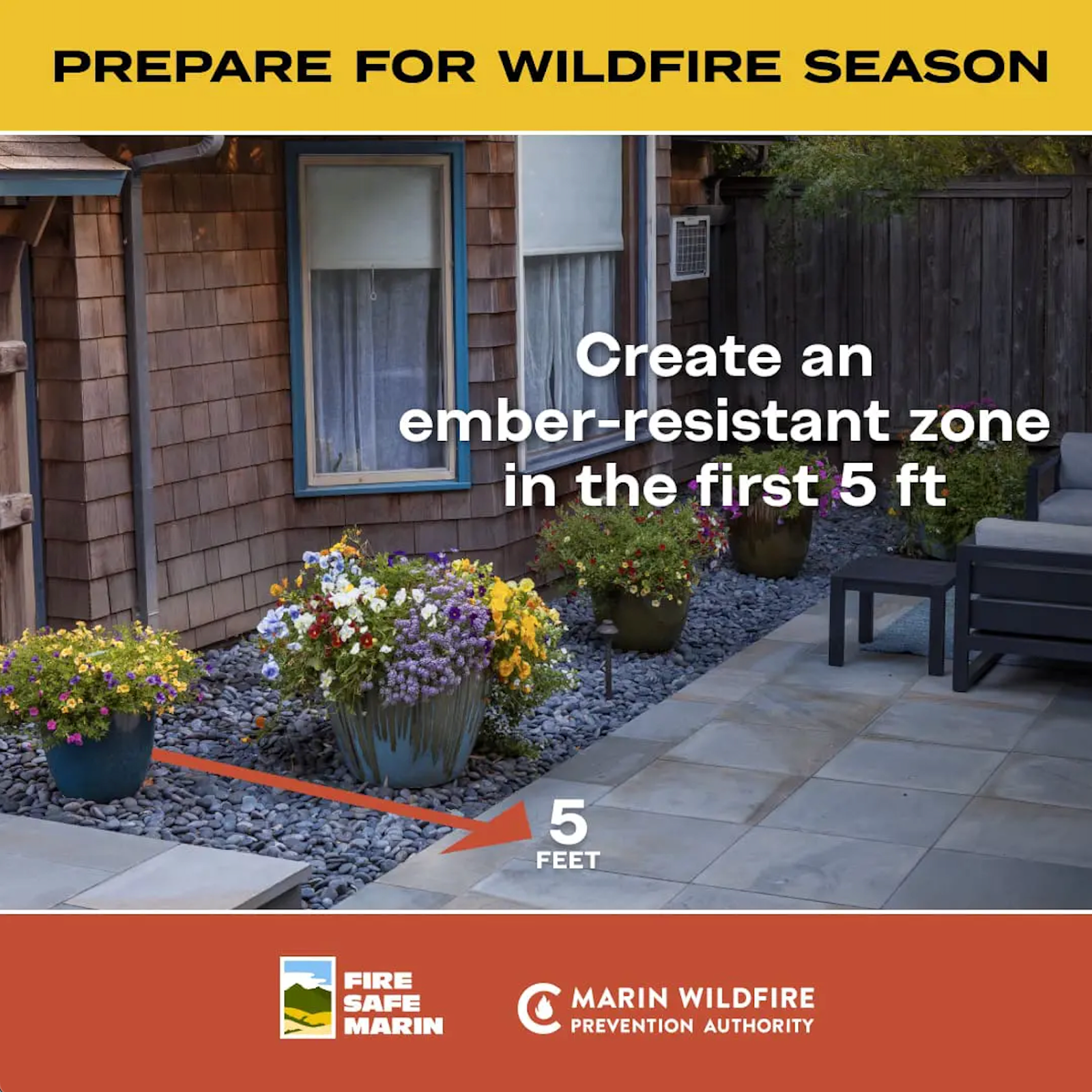
Familiarize yourself with “Zone Zero”: Zone Zero is the first 5 feet of space directly surrounding a home on ground level. It’s also called the “ember resistant zone,” where materials like gravel and cement (and limited vegetation) encourage embers to burn out before they can build enough heat to ignite a home. Regardless of how the home is built, science has shown that these ember-resistant zones dramatically increase the likelihood that a home survives a wildfire.
Understand the various resilient standards and designations: There are different resilient building standards, each with its own building requirements and material specifications. The IBHS has multiple standards: Wildfire Prepared Home Base and Wildfire Prepared Home Plus. Meanwhile, California has its WUI section 7a designation.
Identify the materials and requirements needed to meet resilient standards: Each standard has its own requirements for materials and building standards—from doors and windows, to fencing and eaves, to roofs and downspouts. This is the nuts and bolts of resilient rebuilding and provides a picture of how your home will be built differently from conventional building.
Find a network of professionals experienced with wildfire-resilient home construction: Lean on local architects, contractors, and other homeowners to help benchmark costs.
Explore financing options: Financing exists for resilient rebuilding—from SBA loans to mortgage lender programs and dedicated grant opportunities. PILLAR can help list the available funding options (see below).
PILLAR is Here to Help
PILLAR (the Platform for Long-Lasting Access and Readiness) was created to help homeowners navigate and understand the available options for rebuilding a home to resilient standards. It’s designed to make building to wildfire-resistant standards easier and more accessible to everyone.
PILLAR helps you understand and identify which changes may make your home safer and more insurable.
PILLAR can give you a clearer picture of what resilient building might cost you now and save you in the long run, generating personalized estimates based on your site and home design.
PILLAR can guide you through IBHS certification, helping you unlock potential insurance benefits and document your home’s resilience for future buyers.
And now, homeowners can do a virtual walkthrough on the site to better understand what makes an LA home insurable and fire safe.