
Wildfire Grants Playbook
Rebuilding Safer from Wildfire: Implementation Guidebook for a Post-Fire Resilience Delta Grant Program
Key Takeaways
The "Resilience Delta": We found that rebuilding to the highest wildfire safety standard (IBHS WPH+) costs just $10k–$15k more than traditional construction—often less than 3% of the total rebuilding cost.
The Multiplier Effect: Research proves that offering grants makes households 3x more likely to voluntarily adopt these critical safety upgrades.
Catalytic Scale: This approach is modeled on programs that have successfully fortified over 53,000 homes in other disaster-prone areas, proving it drives widespread market adoption.

The Challenge
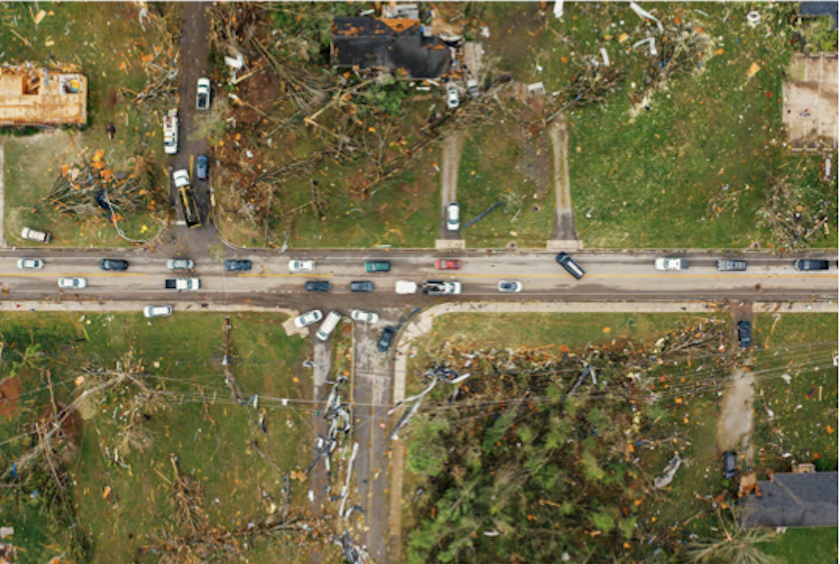
Losses from wildfire are accelerating. The growing risk is stressing insurance and housing markets. Creating resilient and insurable communities is now an imperative. Yet the moment of greatest opportunity-rebuilding after wildfire -is often missed. While wildfire-resistant construction saves society far more than it costs, homeowners face a critical barrier: the up-front costs, or the Resilience Delta, which we define as the difference in cost between building a code-compliant home with traditional materials and building to a higher level of resilience.
The Solution
This guidebook presents a Resilience Delta grant program to help close the financial gap and provide widespread access to improved resilience and insurability. This guidebook is focused on grants for single-family new construction, but the concept could be adapted for multi-family housing, as
Why a grant program?
History has demonstrated that households do not often voluntarily upgrade their home to higher standards of disaster resilience. Research from other perils has found that offering grants, even if not covering the full cost, can be a motivating incentive.
Several existing programs are already well-established in providing disaster recovery advice and support to wildfire survivors. A grant program provides a new financial and educational tool that extends and augments existing initiatives.
Grants for lower-income households can increase their ability to recover and return home with lower future losses and a greater chance at available and affordable insurance.
Hardening homes against wildfire also reduces risk to neighbors. Grants that lead to greater investments in wildfire resilience have positive economic benefits to both the resident and the local economy.
Grant programs can be catalytic in expanding loss reduction more widely in a communty
Download the guidebook
To learn more about best practices in implementing such grants, download the guide today
This guidebook is the result of a powerhouse collaboration between The Resiliency Company, Insurance for Good, the Environmental Defense Fund and the Resources Legacy fund backed by a steering committee of industry-leading organizations.
