
The Benefit of Rebuilding to be Resilient & Insurable
Key Takeaways
Rebuilding to higher resilience standards can reduce future wildfire losses, strengthen local economies, and stabilize insurance and housing markets.
Traditional insurance and recovery funding only cover rebuilding what existed before, creating a major financing gap for safer, climate-ready construction.
Closing the “Resiliency Delta” is critical to helping communities rebuild stronger, safer, and more insurable in the face of increasing climate risks.
The United States is facing an unprecedented challenge in protecting its housing stock from the increasing threats of disasters and extreme weather events. Since 1980, 403 billion-dollar disasters have struck, resulting in over $2.9 trillion in damages.
Los Angeles’s unprecedented Eaton and Palisades fires destroyed nearly 40,000 acres of homes, businesses, and landmarks.
The estimated economic loss of the two disasters is $250 billion. Residents and communities are now beginning the long and difficult road to recovery. Traditionally, rebuilding after a catastrophe has entailed reconstructing exactly what was there before. Several factors contributed to this: anti‑fraud requirements in insurance policies and government programs; infrastructure and building codes that failed to keep pace with escalating climate risks; and worries that any modifications in building standards would introduce delays and higher costs.
Unfortunately, Los Angeles faces significantly increased (and increasing) wildfire risks. Accordingly, there is now an opportunity and imperative to address the aforementioned factors creatively so that communities can rebuild more safely amidst growing climate risks
Safer rebuilding–including choosing fire-resistant building materials, creating defensible space, and implementing fire-resistant landscaping–will lower future losses, improve local economies, and support stable insurance, housing, and mortgage markets.
What is the “Resiliency Delta”
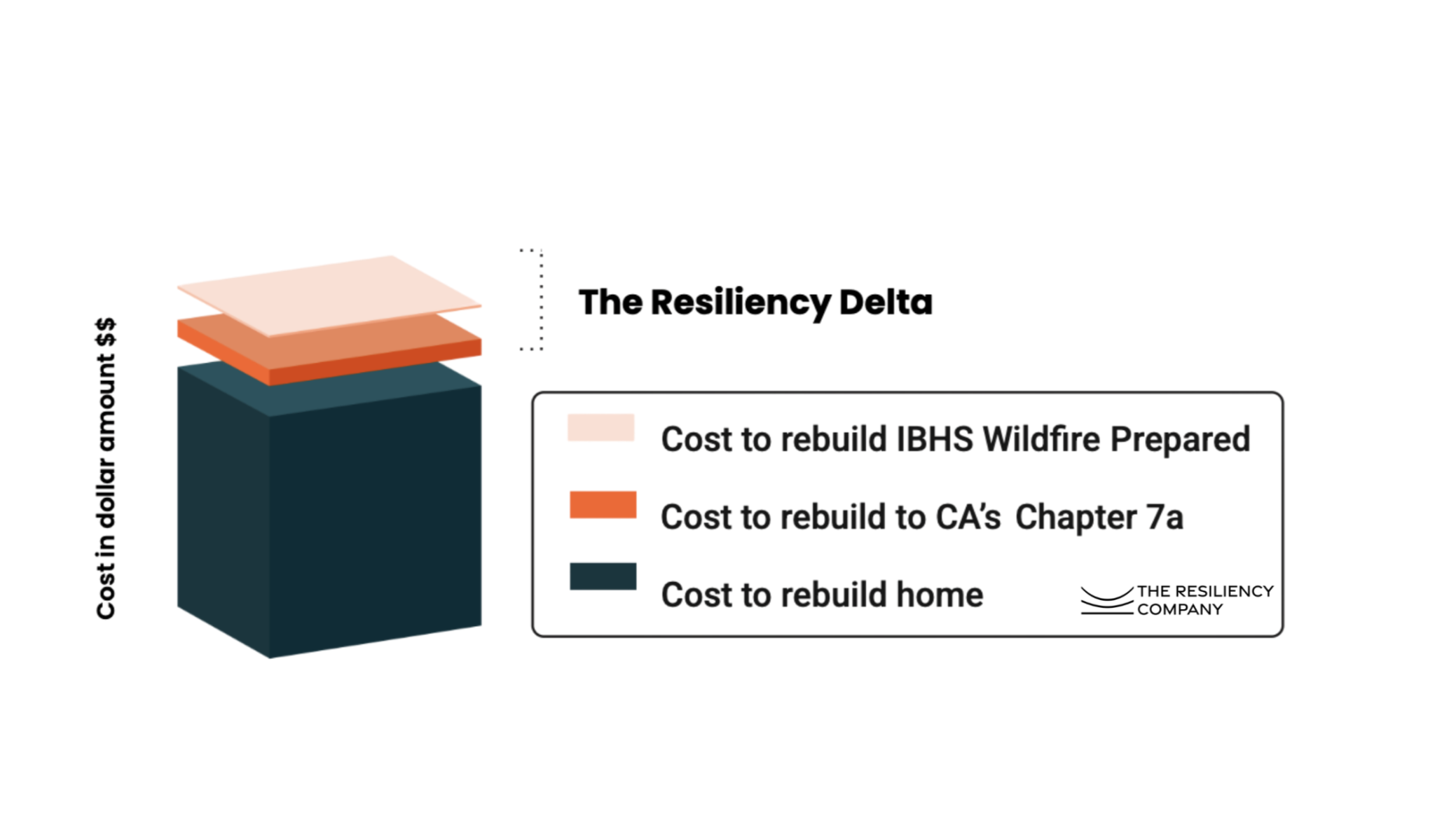
Traditional tools for funding and financing rebuilding, such as insurance and our federal aid programs, only pay to rebuild exactly what was there previously and to meet current codes. To create safer communities for our climate future, buildings need to be reconstructed with higher levels of resilience.
However, building above code is not typically covered by insurance. This financial difference between what current financing will cover and what is necessary to rebuild to the highest level of safety and damage prevention is what we call the Resiliency Delta.
